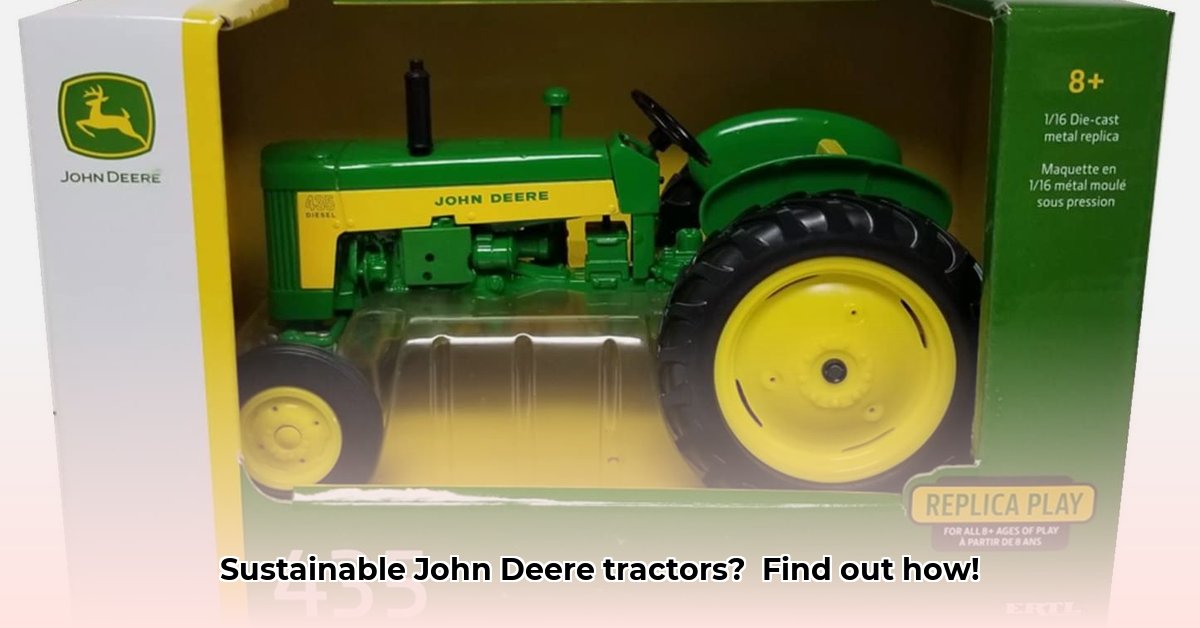
John Deere Metal Toy Tractors: A Greener Future for Classic Play?
The enduring appeal of John Deere metal toy tractors is undeniable. These iconic toys, often passed down through generations, represent a cherished connection to simpler times and agricultural heritage. But in an increasingly environmentally conscious world, a crucial question arises: can these beloved classics maintain their charm while minimizing their environmental impact? This exploration delves into the evolving landscape of sustainable toy manufacturing, focusing on John Deere metal tractors, examining the challenges and breakthroughs in creating greener playthings for future generations. It's a story of both legacy and innovation, of balancing tradition with environmental responsibility. For more information on specific models, check out this vintage tractor resource.
The Green Tractor Revolution: Challenges and Promises
The demand for John Deere toy tractors remains remarkably strong, driving a crucial shift towards sustainable manufacturing practices within the toy industry. The emergence of organizations like Carbonfree, dedicated to establishing carbon footprint standards for toys, represents a significant step forward. This initiative allows for the objective measurement and reduction of a toy's environmental impact, paving the way for truly greener products. However, a significant hurdle persists: a lack of transparency within the industry. Many manufacturers aren't fully forthcoming about their sustainability efforts, creating an information gap for consumers eager to make eco-conscious choices. This lack of transparency is akin to buying "green" energy without knowing its source – the consumer is left uncertain about the product's true environmental credentials.
"The toy industry needs to embrace complete transparency to build credibility with environmentally conscious consumers," says Dr. Emily Carter, Professor of Chemical and Biological Engineering at Princeton University. "Consumers deserve to know exactly what goes into the making of their children's toys."
Scaling Up Sustainability: Can We Make Green Toys for Everyone?
The challenge of scaling up sustainable toy production is multi-faceted. Sustainable materials often come at a higher cost, potentially pricing these cherished toys out of reach for many families. Manufacturing processes designed to minimize environmental harm frequently involve significant technological investments, impacting production costs. This raises a critical question: can we create environmentally friendly toys that are accessible to all, irrespective of economic status? The answer, while complex, lies in collaborative innovation, technological advancement, and a shift towards responsible consumption patterns.
Isn't it ironic that toys meant to represent simple times are currently tangled in complex environmental concerns? This question highlights the need for a comprehensive approach to sustainability within the toy industry.
The Whole Story: From Mine to Landfill (and Beyond)
Understanding the true environmental footprint of a John Deere metal toy tractor requires a holistic life cycle assessment (LCA). This involves analyzing every stage, from raw material extraction to end-of-life disposal. The mining processes employed for steel or zinc alloys affect land use, water quality, and greenhouse gas emissions. The manufacturing process itself – encompassing casting, painting, and assembly – consumes significant energy. The question of renewable energy use in the factories becomes crucial here. Finally, the disposal or recycling of these durable toys poses a significant challenge. What happens to the tractor after playtime ends? Does it end up in a landfill, or are there effective recycling programs in place?
"A complete LCA is vital," states Dr. Maria Sanchez, a leading researcher in sustainable materials at the Massachusetts Institute of Technology (MIT). "It shows us the entire environmental impact of the product, from beginning to end, allowing us to identify areas for improvement."
The Path Forward: A Collaborative Effort
Achieving truly sustainable toy manufacturing necessitates a collaborative approach involving all stakeholders—manufacturers, certifying organizations, consumers, and governments. The following table outlines both short-term and long-term goals for each group:
| Stakeholder Group | Short-Term Goals (0-1 Year) | Long-Term Goals (3-5 Years) |
|---|---|---|
| Toy Manufacturers | Implement increased transparency; explore sustainable material options; reduce waste generation. | Develop fully circular manufacturing; utilize recycled metals and renewable energy; minimize waste to near zero levels. |
| Certification Organizations | Enhance and broaden sustainability standards; create easily understandable certifications. | Establish universal life-cycle assessment (LCA) methodologies for toys, including end-of-life planning. |
| Consumers | Actively seek out sustainable toys; participate in toy recycling and repurposing initiatives. | Advocate for stronger regulations; demand transparency from manufacturers; support ethical sourcing and responsible consumption. |
| Governments/Regulators | Implement incentives for sustainable production; fund research into sustainable materials. | Enact stricter regulations on material sourcing, responsible waste management, and end-of-life product handling. |
A Greener Future for Play: It's Possible
The journey towards truly sustainable John Deere metal toy tractors is ongoing. However, significant strides are being made. Manufacturers are actively exploring alternatives, including recycled metals and bio-based materials. The integration of renewable energy sources into their production facilities represents another vital step forward. The future of play is, indeed, becoming greener. Through collective efforts – manufacturer transparency, conscious consumer choices, and supportive government policies – it is possible to ensure that children can enjoy these timeless toys without compromising the planet's future.
How to Assess the Full Lifecycle Environmental Impact of Metal Toy Tractors
Key Takeaways:
- The value of vintage John Deere toy tractors is influenced by factors such as rarity, condition, and manufacturing methods.
- Authenticating vintage tractors requires careful attention to details like casting quality, paint application, and wear patterns.
- Evaluating the environmental impact involves a complete life cycle assessment, from material sourcing to disposal.
- Growing consumer demand for sustainable toys presents opportunities for manufacturers to innovate.
From Ore to Shelf: Material Sourcing and Manufacturing
A crucial aspect of assessing the environmental impact of these tractors involves evaluating the sourcing of raw materials and the manufacturing processes used. The mining and processing of metals like steel or zinc alloys impact land use, water quality, and greenhouse gas emissions. The sourcing of paints, packaging, and other components also adds to the overall environmental footprint. The manufacturing process itself – including energy consumption and waste generation – needs close scrutiny. Are renewable energy sources used? What happens to manufacturing byproducts such as metal shavings and paint sludge? These are all critical questions.
Transportation and Distribution: The Long Haul
The journey of these miniature tractors from factory to shelves is also a significant contributor to their overall environmental impact. Transportation from the manufacturing facility to distribution centers and retailers adds to the carbon footprint. The sustainability of shipping materials is equally relevant – are they recyclable or biodegradable?
Playing with Sustainability: Product Use and Disposal
While the impact during the actual use phase is relatively limited, the end-of-life of these tractors presents a vital sustainability challenge. Do these durable toys end up in landfills, contributing to mounting waste? Or are there effective recycling or repurposing programs in place? The potential for these tractors to be melted down and reused is a key consideration for their long-term sustainability.
The Future is Green: Sustainable Practices in Toy Manufacturing
Encouragingly, awareness of environmental concerns is growing within the toy industry. Manufacturers are actively exploring ways to minimize their environmental impact, including utilizing sustainable materials (recycled metals, bio-based plastics) and embracing more efficient production processes. They are also focusing on improving packaging design, with a view toward recyclability or compostability. The overarching objective is to create these beloved toys while minimizing their footprint on the planet.
Transparency and Traceability: Following the Trail
Companies truly committed to sustainability are transparent about their supply chains. They readily share information on sourcing, manufacturing, and disposal procedures. Consumers should actively seek out this type of transparency when making purchase decisions. It's a strong indication of a company's commitment to environmentally responsible practices.
Taking Action: Making Informed Choices
Consumers play a crucial role in promoting sustainable toy manufacturing. They can support manufacturers who are committed to environmentally responsible practices. Purchasing pre-owned tractors extends the lifecycle of existing products, lessening demand for new production. Every conscious choice contributes to a greener future where playtime and environmental stewardship go hand in hand.